logo
ホーム ニュース

会社のニュース How Geocell Systems Help Solve Load Distribution Problems in Road Construction

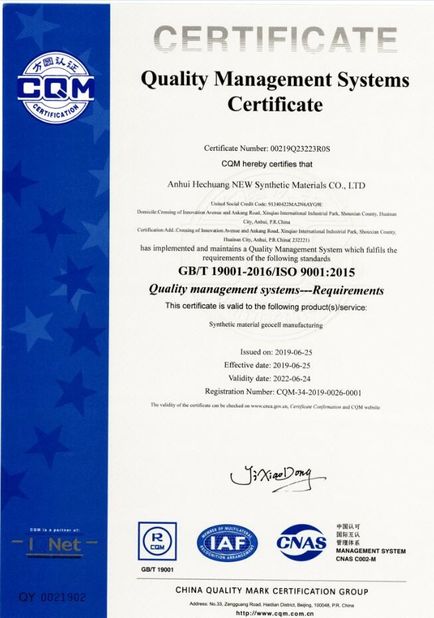
認証
中国 Anhui Hechuang New Synthetic Materials Co., Ltd 認証
顧客の検討
HCNSのチームは信頼できる、私にGeocellsを必要とするプロジェクトが、それら提供し、私にGeocellの右のタイプを私達に彼らのサンプルを点検した後送る試供品を、私達非常に完全に買い、する私達のプロジェクトをある。私達にGeocellのためのプロジェクトが将来あれば、私達はあなたに完全に再度協力する。

—— トニー

オンラインです
会社 ニュース
How Geocell Systems Help Solve Load Distribution Problems in Road Construction
最新の会社ニュース How Geocell Systems Help Solve Load Distribution Problems in Road Construction

How Geocell Systems Help Solve Load Distribution Problems in Road Construction

Weak subgrade conditions remain one of the most common challenges in road and access road construction. In areas with soft soil, frequent rainfall, or repeated heavy vehicle traffic, traditional aggregate layers can gradually spread laterally under pressure, leading to rutting, settlement, and surface instability over time.

To improve ground support performance in these conditions, many infrastructure projects now use HDPE geocell systems as part of the base reinforcement design.

Geocells are three-dimensional cellular confinement structures manufactured from high-density polyethylene (HDPE). Once expanded and filled with aggregate or soil, the interconnected cells create a stabilized layer that helps confine infill materials and distribute loads more evenly across the subgrade.

Why Load Distribution Is Important

In unreinforced road bases, traffic loads are often transferred directly into weak underlying soils. When the subgrade lacks sufficient bearing capacity, aggregate movement and differential settlement can occur relatively quickly, especially under repeated wheel loading.

This problem becomes more noticeable in:

  • Temporary access roads
  • Construction platforms
  • Rural road projects
  • Industrial yards
  • Soft ground areas
  • High-moisture environments

Geocell confinement helps reduce lateral movement within the aggregate layer. Instead of allowing materials to spread outward under pressure, the cellular structure improves confinement and creates a more stable load-bearing platform.

In many cases, this can also reduce the required aggregate thickness while maintaining structural performance.

Improved Stability Under Repeated Traffic Loads

One practical advantage of geocell reinforcement is its ability to improve surface stability under continuous traffic conditions.

On weak or saturated subgrades, conventional granular layers may gradually deform after repeated loading cycles. Over time, this can increase maintenance costs and shorten pavement service life.

By improving confinement between aggregate particles, geocell systems help:

  • Reduce rutting and surface deformation
  • Improve bearing capacity
  • Minimize aggregate displacement
  • Increase base layer stability
  • Support more uniform stress distribution

This is one reason why geocell reinforcement is increasingly used in transportation and ground stabilization projects where long-term durability is important.

Common Applications of HDPE Geocells

HDPE geocell systems are widely used across civil engineering and infrastructure projects due to their flexibility and installation efficiency.

Road Base Reinforcement

Geocells help stabilize road foundations built over weak or variable soil conditions. The confinement effect improves base performance and reduces the risk of premature pavement failure.

Temporary Access Roads

Construction access roads often experience rapid deterioration during wet weather conditions. Geocell systems provide additional support while helping reduce aggregate loss and maintenance requirements.

Slope Protection and Erosion Control

On slopes and embankments, geocells help retain surface materials and reduce erosion caused by runoff or rainfall exposure.

Railway and Industrial Applications

In railway foundations and industrial yards, geocell reinforcement can improve load support and reduce long-term surface deformation caused by repeated heavy loading.

Reducing Material and Transportation Costs

In remote project locations, transporting large quantities of aggregate can significantly increase construction costs.

Because geocell systems improve the efficiency of the base layer, some projects can reduce fill thickness while still maintaining required performance levels. This may help lower:

  • Aggregate consumption
  • Transportation costs
  • Equipment usage
  • Installation time
  • Long-term maintenance frequency

For many contractors, this becomes an important practical advantage rather than only a theoretical engineering benefit.

Choosing the Right Geocell Specification

The performance of a geocell system depends on several project-specific factors, including:

  • Subgrade strength
  • Traffic loading conditions
  • Cell height
  • Weld spacing
  • Material thickness
  • Type of infill material

Selecting the appropriate geocell specification is important for achieving reliable long-term stabilization performance.

GeoMax manufactures HDPE geocell solutions for road construction, slope stabilization, railway support, and ground improvement applications. Our geocell systems are designed for demanding infrastructure environments and can be customized according to project requirements.

As infrastructure projects continue to face increasing ground stabilization challenges, geocell reinforcement remains an effective solution for improving load distribution, surface stability, and long-term pavement performance.

パブの時間 : 2026-05-22 11:53:47 >> ニュースのリスト
連絡先の詳細
Anhui Hechuang New Synthetic Materials Co., Ltd

コンタクトパーソン: Mr. Xu

電話番号: +86 13966660061

私達に直接お問い合わせを送信 (0 / 3000)